
Patonga to Staples Lookout
 Download & Print Map and Notes
 6 hrs 30 mins
 17 km One way
 702 m
702 m Hard track



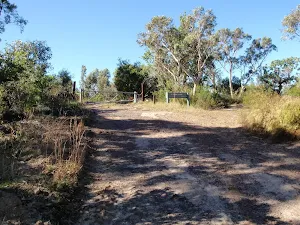
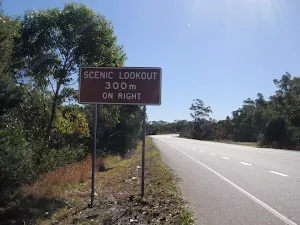
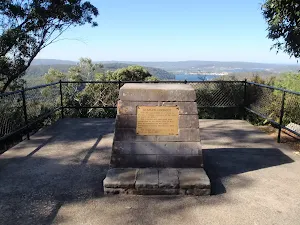
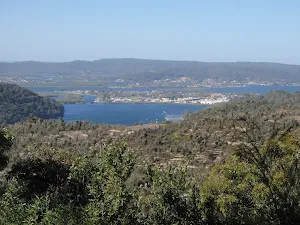
(0km) Patonga Wharf car park → Eastern end of Patonga Beach
 530 m
530 m
 10 mins
 14m
14m
 -13m
Easy track
-13m
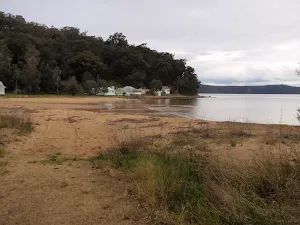
Easy trackContinue straight: From the boat ramp, this walk follows the power lines across the car park, keeping the water to the right. The walk heads around the gate and continues to follow the power lines across the sand, coming to the eastern end of Patonga Beach and the 'Brisbane Water National Park' sign[13]. This area of the beach is also know as 'Dark Corner'.
(1km) Eastern end of Patonga Beach → Broken Bay View
590 m
21 mins
122m
0m
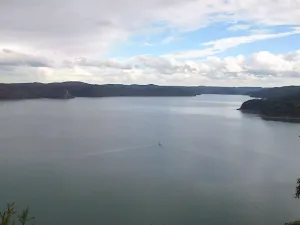
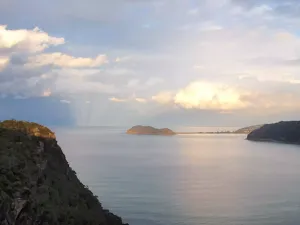
Moderate trackBroken Bay View
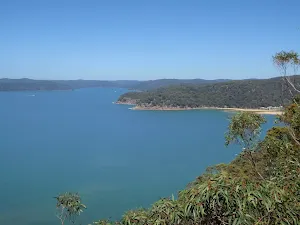
(1km) Broken Bay View → Warrah Lookout intersection
700 m
15 mins
26m
-26m
Moderate trackVeer right: From the intersection, this walk follows the Great North Walk arrow downhill along the wide management trail. After about 250m, the trail passes a track on the right (marked with 5 large boulders - this informal track leads to an unfenced view). The walk continues along the management trail for another 100m and comes to an intersection near the Warrah Lookout, and a sign pointing back to 'Patonga'[17].
(2km) Warrah Lookout intersection → Warrah Lookout
70 m
2 mins
0m
-12m
Easy trackWarrah Lookout
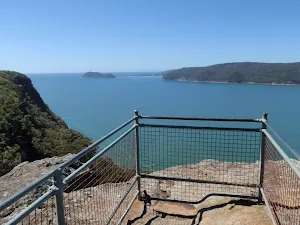
(2km) Warrah Lookout intersection → Warrah Trig Station
310 m
7 mins
39m
0m
Easy trackWarrah Trig Station
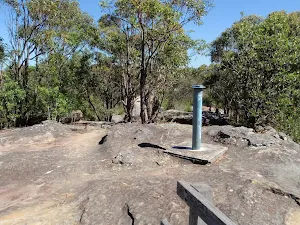
(2km) Warrah Trig Station → Warrah car park
30 m
1 mins
0m
0m
Easy track(2km) Warrah Car Park → Int Warrah Trig Rd trail and Warrah Trig Station Rd
310 m
5 mins
2m
-4m
Easy track(2km) Int of Warrah Trig trail and Warrah Trig Station Rd → Int of Great North Walk and Patonga Dr
1.2 km
22 mins
23m
-14m
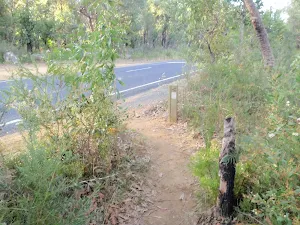
Moderate trackVeer right: From the intersection, this walk follows the GNW arrow marker around the drainage ditch[22] to follow the track running parallel to Patonga Drive (keeping the road about 20m to your left). The track leads through the heath and scribbly gum forest[23] for about 100m before passing some distant ocean views[24] (on your right), where the track continues for another 150m to come to the sealed Patonga Drive[25]. Here the walk follows the GNW arrow post[26] across the road to a locked gate and management trail[27], marked with a 'Great North Walk' sign[28].
(4km) Int of Great North Walk and Patonga Dr → Rock platform intersection
870 m
14 mins
5m
-16m
Moderate trackVeer right: From the intersection, this walk follows the 'Girrakool' sign[34] gently up along the wide trail. After about 200m, the trail bends left[35], then leads gently down for another 100m, coming to an intersection[36] where the main trail bends right (and with the narrower Patonga Creek trail ahead), marked with a GNW arrow post[37].
Turn right: From the intersection, this walk follows the GNW arrow post north along the wide sandy management trail. The trail leads among the heath and large scribbly gums[38] for about 270m to come to T-intersection[39] with another wide trail[40], marked with a 'Patonga' sign[41] pointing back up along the trail.
Turn left: From the intersection, this walk follows the 'Girrakool' sign[42] downhill along the management trail. Over the next 200m, the trail gently bends right then comes to an intersection (just before a large open rock platform[43]), marked with a 'Girrakool' sign[44] (pointing right).
(5km) Int of Hawkesbury track and Patonga Dr trail → Int of Hawkesbury track and Sani Depot Trail
1.1 km
21 mins
25m
-39m
Moderate track(6km) Int of Hawkesbury track and Sani Depot Trail → Rock Platform
1.3 km
25 mins
21m
-56m
Moderate trackContinue straight: From the intersection, this walk follows the wide trail downhill[60], keeping the valley to your left. The trail winds downhill for almost 600m, crossing a couple of culverted creeks[61][62], until, just after a left-hand bend, this walk comes to a noteable rock platform[63] (with an ephemeral creek) and filtered view down the valley (to your left)[64].
(7km) Rock Platform → Woy Woy landfill view
960 m
25 mins
77m
-39m
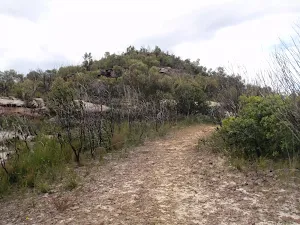
Hard trackTurn left: From the intersection, the walk follows the 'Great North Walk' sign[73] downhill along the track. After just shy of 100m, the track crosses Patonga Creek[74] among the moist cabbage palm[75] forest. Soon after crossing this creek, the track begins to head quite steeply uphill[76] for another 100m, passing a faint side track[77] before climbing up some carved steps[78] in the rock beside a sloped rock platform (on your left)[79]. The track continues steeply up for another 40m, where the track bends right (at the GNW arrow post)[80] to head over a mostly flat rock outcrop. The track continues (with occasional glimpses of the Woy Woy landfill[81]) gently uphill for just over 100m to pass another side track[82], then lead up a bit more steeply[83] for just over 100m more (past a rock wall[84], on your left) to come to an unfenced clear view over Woy Woy landfill[85] (where the track bends left[86]).
(8km) Woy Woy landfill view → Int of Rocky Ponds Trail and Tunnel Track
2 km
42 mins
83m
-75m
Hard trackContinue straight: From the intersection, this walk follows the GNW arrow post west[101] (in the opposite direction to the 'Patonga' sign[102]. After about 20m, this short track leads to an intersection with the signposted 'Tunnel Trail'[103].
Turn right: From the intersection, this walk follows the GNW arrow post[104] gently uphill along the 'Tunnel Trail'. After about 50m, the trail passes through a metal gate[105] and fence then continues for just over 100m to come to the signposted intersection with the 'Rocky Ponds Trail'[106], where a 'Patonga' sign[107] points back down along the trail.
(10km) Int of Rocky Ponds Trail and Tunnel Track → Mt Wondabyne Campsite
1.2 km
25 mins
64m
-8m
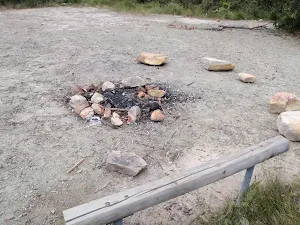
Moderate trackTurn left: From the intersection, this walk follows the GNW arrow marker as well as the 'Mt Wondabyne'[111] and 'Girrakool'[112] signs uphill along the management trail. The trail winds up the hill for about 300m find a view of Mount Wondabyne[113] - there are also nice views behind (and to the right) across Woy Woy and the Brisbane Water[114]. The trail continues uphill for another 400m to end at a large clearing[115] (turning circle) at the base of a rock wall. This is the Mt Wondabyne Campsite[116] - there is also a sign pointing back down to 'Patonga'[117].
Mt Wondabyne Campsite
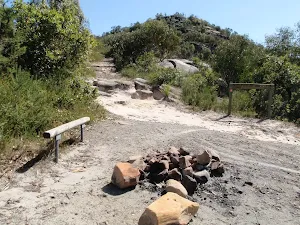
(11km) Mt Wondabyne Campsite → Int of Great North Walk and Mt Wondabyne Peak tracks
90 m
2 mins
6m
0m
Moderate track(11km) Int of Great North Walk and Mt Wondabyne Peak tracks → Mt Wondabyne Peak
210 m
5 mins
20m
-1m
Hard trackMt Wondabyne
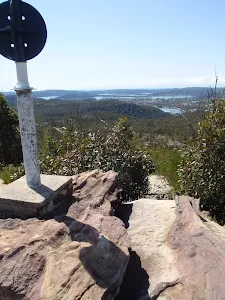
(11km) Int of GNW and Mt Wondabyne Peak tracks → Int of GNW and Mullet Creek Trail
950 m
21 mins
11m
-109m
Hard track(12km) Int of GNW and Mullet Creek Trail → Int of GNW and Thommos Loop trail
1 km
22 mins
54m
-29m
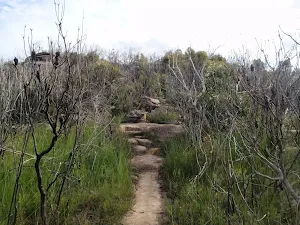
Moderate trackTurn left: From the intersection, this walk follows the 'Girrakool' sign[140], heading under the power lines and down along the track to soon cross a small ephemeral creek[141]. From the creek, this walk follows a rock platform[142] for about 200m to then head over a section of timber boardwalk[143] and past a few disused power poles[144]. The track soon begins to climb and crosses a number or rock platforms[145] for about 300m to come to a notably large rock platform[146] with a wide view across the valley to Mt Wondabyne[147]. Here the track continues up for another 250m to an intersection[148] with a wide trail (at another rock platform), where a 'Patonga' sign[149] points back down along the track.
(13km) Int of GNW and Thommos Loop track → Int of the Great North Walk and Patonga service trail
1.5 km
28 mins
34m
-54m
Moderate track(15km) Int of the Great North Walk and Patonga service trail → Kariong Brook crossing
690 m
24 mins
21m
-122m
Hard trackKariong Brook Falls
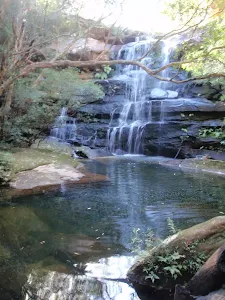
(15km) Int of the Great North Walk and Patonga service trail → Int of Great North Walk and Woy Woy Road
1.8 km
37 mins
83m
-22m
Moderate trackContinue straight: From the rock platform, this walk heads north east along the management trail, keeping the main valley views to the left. The trail winds up the hill to come to a four-way intersection with the power line management trail and a 'Thommas Loop' (sign pointing back down the hill).
Continue straight: From the intersection, this walk heads up the hill following the service trail, past the National Park gate to the intersection of Woy Woy Road.
(17km) Int of Thommos Trail and Woy Woy Road → Staples Lookout
370 m
7 mins
13m
0m
Easy trackStaples Lookout
Maps for the Patonga to Staples Lookout walk
You can download the PDF for this walk to print a map.
These maps below cover the walk and the wider area around the walk, they are worth carrying for safety reasons.
| Gosford | 1:25 000 Map Series | 91312S GOSFORD | NSW-91312S |
| Broken Bay | 1:25 000 Map Series | 91301N BROKEN BAY | NSW-91301N |
| Ku-ring-gai Chase National Park Tourist Map | 1:40 000 Map Series | CMA Ku-ring-gai Chase National Park Tourist Map | CMA Ku-ring-gai Chase National Park Tourist Map |
| Gosford | 1:100 000 Map Series | 9131 GOSFORD | 9131 |
| Sydney | 1:100 000 Map Series | 9130 SYDNEY | 9130 |
Cross sectional view of the Patonga to Staples Lookout bushwalking track
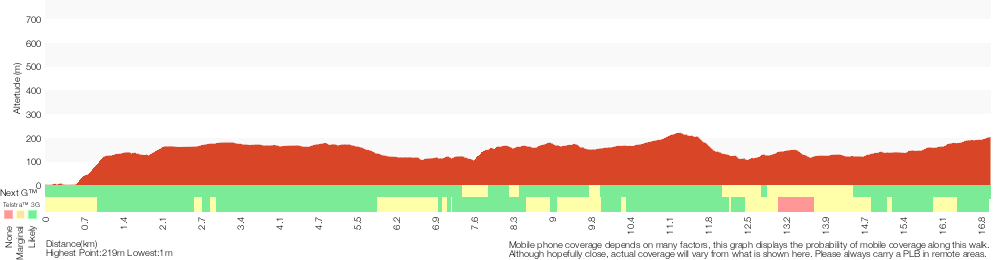
Analysis and summary of the altitude variation on the Patonga to Staples Lookout
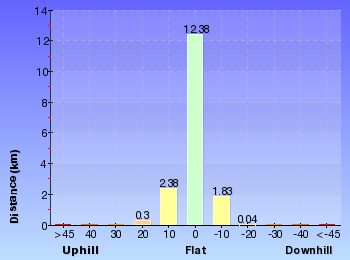
Overview of this walks grade – based on the AS 2156.1 – 2001
Under this standard, a walk is graded based on the most difficult section of the walk.
| Length | 17 km | ||
| Time | 6 hrs 30 mins | ||
| . | |||
Grade 4/6 Hard track | AS 2156.1 | Gradient | Very steep (4/6) |
| Quality of track | Rough track, where fallen trees and other obstacles are likely (4/6) | ||
| Signs | Directional signs along the way (3/6) | ||
| Experience Required | Some bushwalking experience recommended (3/6) | ||
| Weather | Weather generally has little impact on safety (1/6) | ||
| Infrastructure | Limited facilities (such as cliffs not fenced, significant creeks not bridged) (4/6) |
Some more details of this walks Grading
Here is a bit more details explaining grading looking at sections of the walk
Gradient
8km of this walk has gentle hills with occasional steps and another 7km has short steep hills. Whilst another 1.3km is flat with no steps and the remaining 440m is very steep.
Quality of track
13km of this walk follows a clear and well formed track or trail and another 3.2km follows a rough track, where fallen trees and other obstacles are likely. The remaining (1.2km) follows a formed track, with some branches and other obstacles.
Signs
Around 11km of this walk has directional signs at most intersection, whilst the remaining 6km is clearly signposted.
Experience Required
Around 13km of this walk requires no previous bushwalking experience, whilst the remaining 4.1km requires some bushwalking experience.
weather
This whole walk, 17km is not usually affected by severe weather events (that would unexpectedly impact safety and navigation).
Infrastructure
11km of this walk is close to useful facilities (such as fenced cliffs and seats) and another 6km has limited facilities (such as not all cliffs fenced). The remaining (440m) has limited facilities (such as cliffs not fenced, significant creeks not bridged).
Similar walks
A list of walks that share part of the track with the Patonga to Staples Lookout walk.
Warrah Trig to Lookout
756 m Return, 20 mins

Easy track
Warrah Trig to Patonga
2.2 km One way, 1 Hr
Moderate track
Warrah Trig to Pearl Beach
2.8 km One way, 1 hr 15 mins
Moderate track
Patonga to Warrah Trig Station
4.3 km Return, 2 hrs
Moderate track
Patonga to Pearl Beach
4.3 km One way, 1 hr 45 mins
Moderate track
Pearl Beach to Warrah Lookout
5.1 km Return, 2 hrs
Moderate track
Staples Lookout to Kariong Brook
5.8 km Return, 2 hrs 30 mins
Hard track
Staples Lookout to Mt Wondabyne loop
10.8 km Circuit, 4 hrs 30 mins
Hard track
Girrakool to Staples Lookout via Kariong Brook Falls
12.3 km One way, 5 hrs 30 mins
Hard track
Wondabyne to Woy Woy
15.4 km One way, 6 hrs

Hard track
Patonga to Woy Woy
15.5 km One way, 5 hrs 45 mins
Hard track
Little Wobby to Woy Woy via Rocky Ponds
16.1 km One way, 6 hrs 30 mins

Experienced only
Patonga to Wondabyne station via Mt Wondabyne
19.5 km One way, 7 hrs 30 mins
Hard track
Girrakool to Woy Woy station via Mt Wondabyne
20.7 km One way, 8 hrs 30 mins
Hard track
Wondabyne to Woy Woy station via Pindar Caves
24 km One way, 8 hrs 30 mins
Experienced only
Girrakool to Patonga
24.8 km One way, 10 hrs
Hard track
Girrakool to Patonga Overnight
24.8 km One way, 2 Days
Hard track
Patonga to Wondabyne station via Pindar Caves overnight
28.1 km One way, 2 Days
Experienced only
Cowan to Wondabyne station via Patonga rest area
33.4 km One way, 2 Days
Hard track
Patonga to Somersby
41.5 km One way, 3 Days
Hard track
Other Nearby walks
A list of walks that start near the Patonga to Staples Lookout walk.
McKell Park Loop
931 m Circuit, 30 mins
Moderate track
McKell Park to Flat Rock Point
1.4 km Return, 30 mins

Very easy
Little Wobby to Rocky Ponds
18.1 km Return, 8 hrs
Hard track
Mt Ettalong Lookout
1.4 km Return, 30 mins

Easy track
Flint and Steel Beach and bay loop
2.8 km Circuit, 1 hr 30 mins


Very experienced only
Flint and Steel track
2.1 km Return, 1 Hr

Moderate track
Flint and Steel Bay (to White Horse Beach)
1.9 km Return, 1 Hr
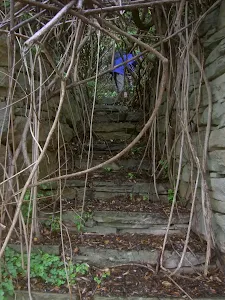
Hard track
Aboriginal Heritage Track
1.1 km Circuit, 45 mins
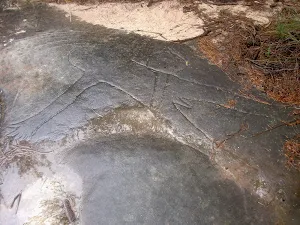
Moderate track
Resolute Track
3.7 km Return, 1 hr 30 mins
Hard track
Headland track (Resolute track)
3.5 km Circuit, 1 hr 45 mins
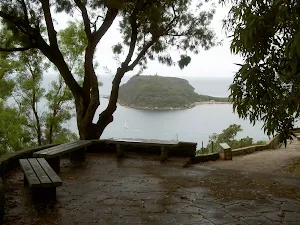
Hard track
West Head Lookout Track
1.9 km Return, 1 Hr
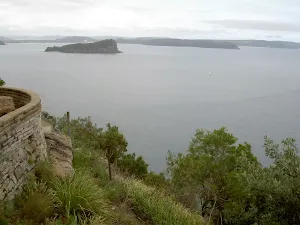
Moderate track
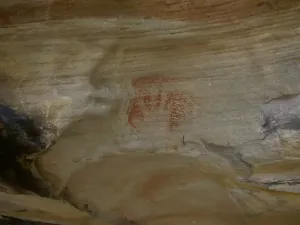
Red Hands Cave
403 m Circuit, 30 mins
Moderate track
Plan your trip to and from the walk here
The Patonga to Staples Lookout walk starts at the Patonga Wharf car park (gps: -33.550430, 151.27456)
 Ferry. Ferry service operates between Palm Beach and Bobbin head daily. Stopping at Patoonga Beach (and Cottage Point on request).
Mon - Fri once a day (before lunch)
Weekends and school holidays 3 times a day from Bobbin Head.
(can get also get it later on the way to palm beach on request)
Phone to confirm times on the day 0414466635 (get details)
Ferry. There is no regular ferry service between Patonga and Brooklyn any more. You can easily grab a water taxi (about $80+). If you are part of a large group they can also organise a larger boat carrying 35 passengers (about $16 pp). Phone 0410 554 777 to book. Enjoy the boat ride. (get details)
Ferry. Ferry service operates between Palm Beach and Bobbin head daily. Stopping at Patoonga Beach (and Cottage Point on request).
Mon - Fri once a day (before lunch)
Weekends and school holidays 3 times a day from Bobbin Head.
(can get also get it later on the way to palm beach on request)
Phone to confirm times on the day 0414466635 (get details)
Ferry. There is no regular ferry service between Patonga and Brooklyn any more. You can easily grab a water taxi (about $80+). If you are part of a large group they can also organise a larger boat carrying 35 passengers (about $16 pp). Phone 0410 554 777 to book. Enjoy the boat ride. (get details)
 Bus. A bus service runs along Patonga Drive down to Patonga. The service only runs a few times a day. Please check timetable for more info or Phone Busway on (02) 4368 2277 (route 50) (get details)
 Car. There is free parking available.<br /> (get details)
The Patonga to Staples Lookout ends at the Staples Lookout (gps: -33.471741, 151.28830)
Weather Forecast
This walk starts in the Hunter weather district.
Current Alerts
Park Information
Brisbane Water National Park
Brisbane Waters National Park is situated south west of Gosford perched on the Hawkesbury River. The park is characterised by sandstone features, Aboriginal engravings, flowery heaths, bird life and spectacular water views. Brisbane Waters NP has many bushwalks through the are with the Great North Walk passing through the middle of the park.