
Woodford to Glenbrook
 Download & Print Map and Notes
 3 Days
 29.6 km One way
 731 m
731 m Hard track






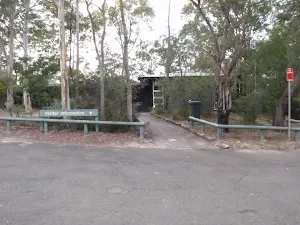
Woodford
(0km) Woodford Station → Int. Oaks Firetrail and Old Bathurst Rd
 730 m
730 m
 15 mins
 22m
22m
 -39m
Easy track
-39m
Easy track(1km) Int. Oaks Firetrail and Old Bathurst Rd → Int. Oaks Firetrail and cliff lookout Trk
3.5 km
1 hr 10 mins
87m
-175m
Moderate track(4km) Int. Oaks Firetrail and cliff lookout Trk → Cliff lookout
100 m
3 mins
5m
-18m
Hard trackCliff Lookout
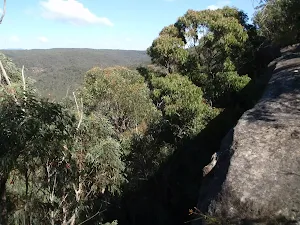
(4km) Int. Oaks Firetrail and cliff lookout Trk → Int. Wheel Gully Trail and Oaks Firetrail
7.9 km
2 hrs 45 mins
318m
-316m
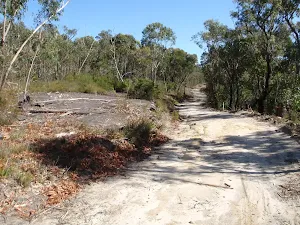
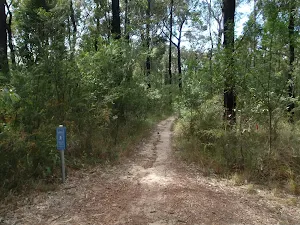
Hard trackContinue straight: From the intersection, the walk heads south up the hill, passing a blue marker sign soon after leaving the intersection. The track then continues up onto the ridge top, then follows the high ground for some time. The track along the ridgeline is surrounded by rocky surfaces and lower vegetation which lends views of the surrounding valleys. The track begins to descend after winding over and around the ridgeline for some time. As the track descends, it passes a rock shelf to the right of the track, which has good views over the valley. The track continues down the hill into a saddle with an intersection with a gate, to the left.
Continue straight: From the intersection in the saddle the track heads up the hill for a short time. The track climbs up onto a plateau where the track is bordered by rocky surfaces and low scrub across the ridge line. This plateau is then left as the track descends slightly as the track winds along the hillside for some time to wind right, coming quickly to the intersection.
(12km) Int. Wheel Gully Trail and Oaks Firetrail → Int. in Wheel Gully loop
100 m
2 mins
0m
-16m
Moderate trackWheel Gully
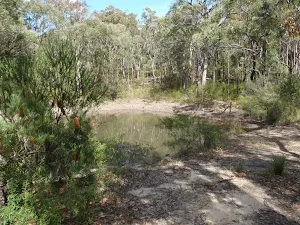
End of day 1
(12km) Int. in Wheel Gully loop → Int. Wheel Gully Trail and Oaks Firetrail
100 m
2 mins
16m
0m
Moderate track(12km) Int. Wheel Gully Trail and Oaks Firetrail → The Oaks Picnic Area
6 km
1 hr 59 mins
26m
-270m
Moderate trackContinue straight: From the intersection, the walk heads down a slight slope. The trail drops down some steeper sections as the trail generally descends at a gentle gradient, winding slightly as it leads down to a gate and interpretative sign before an intersection.
Continue straight: From the intersection, the walk heads east, directly away from the gate and sign to the bend in the management trail.
Continue straight: From the intersection, the walk heads away from both the '40' sign and the gate, heading east down the management trail. The walk soon comes to the intersection, signposted 'Red Hands Cave'.
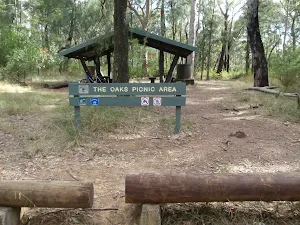
Veer right: From the intersection, the walk heads in an easterly direction along the management trail, tending left around to the Oaks Picnic Area on the left and the car park on the right.
The Oaks Picnic Area
(18km) The Oaks Picnic Area → Int. Oaks Picnic Area Trk and Oaks single Trk
70 m
1 mins
2m
0m
Moderate track(18km) Int. Oaks Picnic Area Trk and Oaks single Trk → 5km to Glenbrook Sign
2.3 km
38 mins
5m
-72m
Moderate track(21km) 5km to Glenbrook Sign → The Ironbark Picnic Area
2.7 km
46 mins
8m
-52m
Moderate trackTurn right: From the intersection, the walk follows the narrower track east towards the road. The track opens up at the car park, and the walk crosses the road to the Ironbark picnic area.
Ironbark Picnic Area
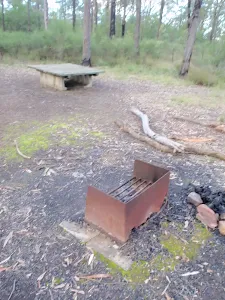
(23km) The Ironbark Picnic Area → Top of Darug campsite car park
1.6 km
30 mins
8m
-98m
Moderate trackVeer left: From the dirt road just below the signposted 'Nioka' campsite, this walk follows the main road, initially keeping the campsite to the left. The walk heads across a small, bridged creek crossing and up to the intersection. At the intersection, there are some information signs about the area (on the right).
Continue straight: From the signposts, the walk follows the 'Daruk'[2] arrow along the flat dirt road, keeping the hill up to the left. After passing the garbage bins, the trail crosses a small creek and comes to an intersection with a bush track on the left, just before the signposted 'Darug' campsite.
Euroka Campground - Darug
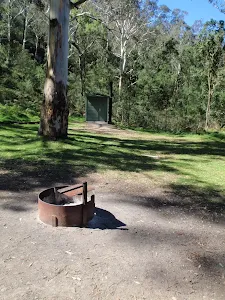
End of day 2
(25km) Top of Darug campsite car park → Int. Euroka Trk and The Oaks Fire Trail
2.3 km
51 mins
111m
-103m
Hard trackContinue straight: From the intersection, the walk heads north, following neither of the arrows on the sign. The track soon comes to Mount Portal Trail, just next to the intersection with Euroka Road.
Veer right: From the intersection, the walk follows the 'The Causeway' sign, along the bush track. The track tends right into the low grassy bush. As the track continues down the hill, the grass gives way to wattle bush covering the gully. The track leads down many stairs then crosses a creek or two before winding along the hillside. The track then continues down into the gully to pass a fading track, on the left, then winds through to a hairpin corner on the road, marked by a 'Euroka Track' sign (pointing back the way you came).
(27km) Int. Euroka Trk and The Oaks Fire Trail → Eastern side of Causeway
230 m
5 mins
0m
-28m
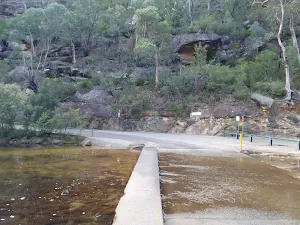
Moderate trackVeer right: From the southern side of the causeway, the walk heads across the causeway to the road, next to the fenced, paved area. The causeway may be impassable after rain.
Glenbrook causeway
(27km) Eastern side of Causeway → Jelly Bean Pool
320 m
6 mins
5m
-6m
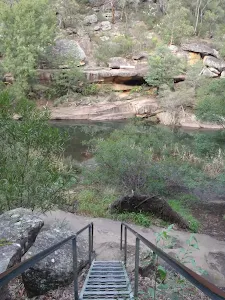
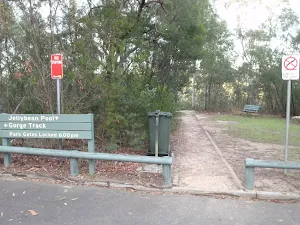
Hard trackJellybean Pool
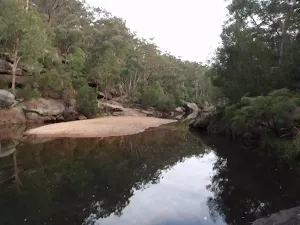
(28km) Jelly Bean Pool → Glenbrook Information Centre car park
500 m
13 mins
88m
-3m
Moderate trackContinue straight: From the bins, the walk heads up to the top of the car park to the sealed road. The walk soon turns right, up the stairs and into the bush. The walk heads up many stairs, crossing the road twice along the way. The track winds around a rocky outcrop and enters a small grassed area with bench seats. The walk continues past these seats to the bottom of the car park, at the front of the Glenbrook Information Centre.
NPWS Glenbrook Information Centre
(28km) Glenbrook Information Centre car park → Glenbrook Station
1.3 km
23 mins
35m
-13m
Moderate trackGlenbrook
Maps for the Woodford to Glenbrook walk
You can download the PDF for this walk to print a map.
These maps below cover the walk and the wider area around the walk, they are worth carrying for safety reasons.
| Springwood | 1:25 000 Map Series | 90304S SPRINGWOOD | NSW-90304S |
| Penrith | 1:25 000 Map Series | 90303N PENRITH | NSW-90303N |
| Jamison | 1:25 000 Map Series | 89302N JAMISON | NSW-89302N |
| Katoomba | 1:25 000 Map Series | 89301S KATOOMBA | NSW-89301S |
| Penrith | 1:100 000 Map Series | 9030 PENRITH | 9030 |
| Katoomba | 1:100 000 Map Series | 8930 KATOOMBA | 8930 |
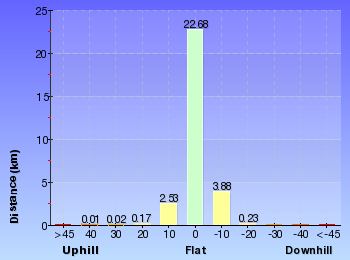
Cross sectional view of the Woodford to Glenbrook bushwalking track
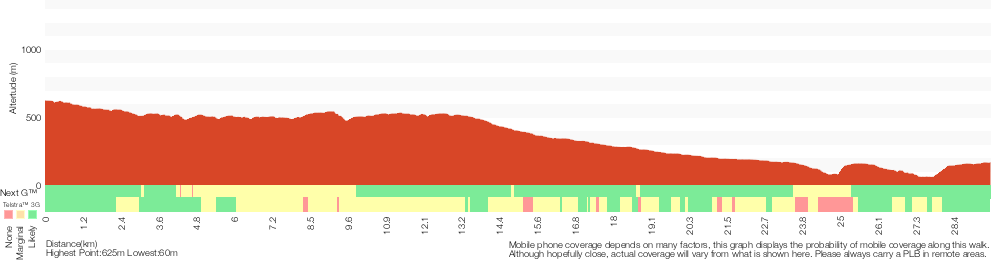
Analysis and summary of the altitude variation on the Woodford to Glenbrook
Overview of this walks grade – based on the AS 2156.1 – 2001
Under this standard, a walk is graded based on the most difficult section of the walk.
| Length | 29.6 km | ||
| Time | 3 Days | ||
| . | |||
Grade 4/6 Hard track | AS 2156.1 | Gradient | Very steep (4/6) |
| Quality of track | Rough track, where fallen trees and other obstacles are likely (4/6) | ||
| Signs | Minimal directional signs (4/6) | ||
| Experience Required | Moderate level of bushwalking experience recommended (4/6) | ||
| Weather | Storms may impact on navigation and safety (3/6) | ||
| Infrastructure | Limited facilities, not all cliffs are fenced (3/6) |
Some more details of this walks Grading
Here is a bit more details explaining grading looking at sections of the walk
Gradient
14km of this walk has short steep hills and another 6km is very steep. Whilst another 6km has gentle hills with occasional steps and the remaining 3km is flat with no steps.
Quality of track
16km of this walk follows a formed track, with some branches and other obstacles and another 11km follows a clear and well formed track or trail. Whilst another 2.5km follows a smooth and hardened path and the remaining 320m follows a rough track, where fallen trees and other obstacles are likely.
Signs
21km of this walk has directional signs at most intersection and another 4.5km is clearly signposted. The remaining (4.3km) has minimal directional signs.
Experience Required
27km of this walk requires no previous bushwalking experience and another 1.9km requires some bushwalking experience. The remaining (320m) requires a leader a with moderate level of bushwalking experience.
weather
Around 29km of this walk is not usually affected by severe weather events (that would unexpectedly impact safety and navigation), whilst the remaining 330m is affected by storms that may impact your navigation and safety.
Infrastructure
Around 25km of this walk has limited facilities (such as not all cliffs fenced), whilst the remaining 4.1km is close to useful facilities (such as fenced cliffs and seats).
Similar walks
A list of walks that share part of the track with the Woodford to Glenbrook walk.
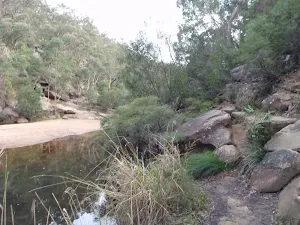
Jellybean Pool
218 m Return, 20 mins
Moderate track
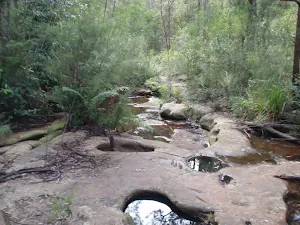
Jellybean Track
1 km Return, 45 mins
Moderate track
Euroka to Red Hands Cave
4.3 km One way, 1 hr 45 mins

Experienced only
Glenbrook to Red Hands Cave (via Jellybean Pool)
4.4 km One way, 2 hrs
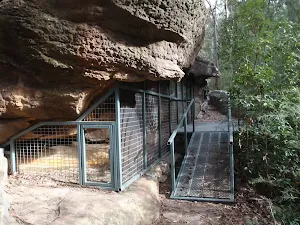
Hard track
Red Hands Cave Circuit via Campfire Creek
8.4 km Circuit, 3 hrs 45 mins
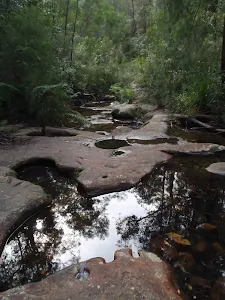
Experienced only
Woodford Station to cliff lookout
8.6 km Return, 3 hrs 30 mins
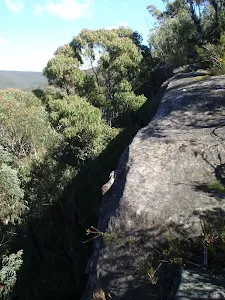
Hard track
Martin's Lookout to Woodford Station
15.9 km One way, 7 hrs
Experienced only
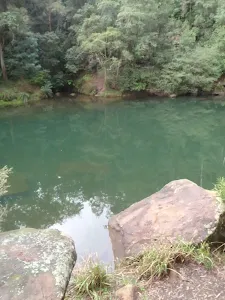
Glenbrook and Euroka Circuit
16.6 km Circuit, 2 Days
Experienced only
The Oaks Picnic area to Woodford Station
18.1 km One way, 7 hrs

Hard track
Woodford to Blaxland Station
18.3 km One way, 7 hrs 15 mins
Experienced only
Glenbrook to Lapstone via Euroka
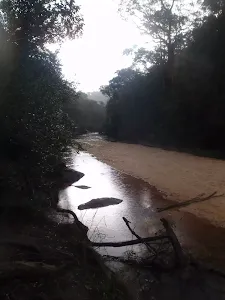
18.8 km One way, 2 Days

Very experienced only
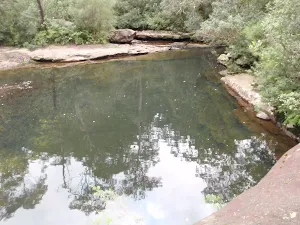
Woodford to Faulconbridge
23.4 km One way, 2 Days
Experienced only
Other Nearby walks
A list of walks that start near the Woodford to Glenbrook walk.
Martin's Lookout
180 m Return, 15 mins
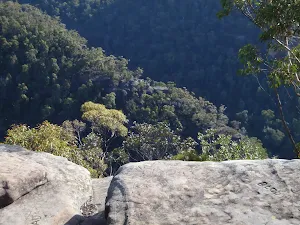
Moderate track
Martin's Lookout to Bunyan Lookout
3.1 km Return, 3 hrs 30 mins
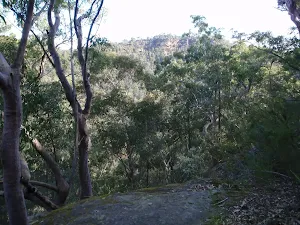
Experienced only
Martin's Lookout to Glenbrook Creek
1.2 km Return, 1 hr 30 mins
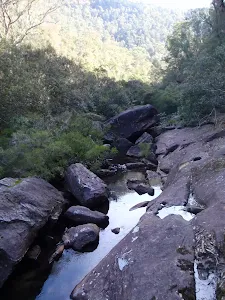
Hard track
Martin's to Lost Worlds Lookout
5.4 km Return, 3 hrs 30 mins
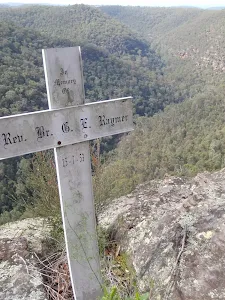
Experienced only
Kings Tableland Walk
1.6 km One way, 45 mins
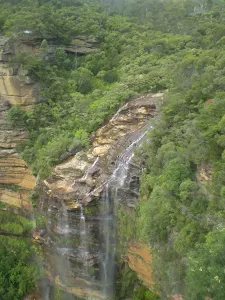

Easy track
Plateau Pde Florabella Pass Loop
2.6 km Circuit, 1 hr 30 mins
Hard track
Plateau Pde to Blaxland Station via Florabella Pass
2.9 km One way, 2 hrs
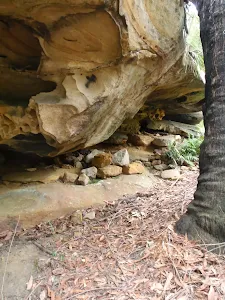
Hard track
Rocket Point Lookout Track
1.3 km Return, 1 Hr
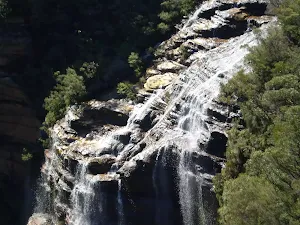
Moderate track
Wentworth Falls Lookouts Loop
1.7 km Circuit, 1 Hr
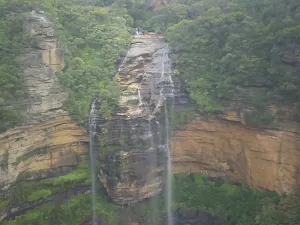
Hard track
Wentworth Falls to Denfenella Lookout
2.2 km Circuit, 1 hr 30 mins
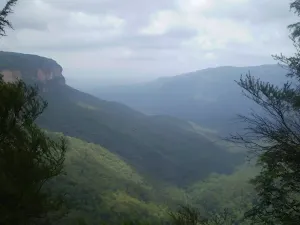
Hard track
Wentworth Falls Undercliff Loop
2 km Circuit, 1 hr 30 mins
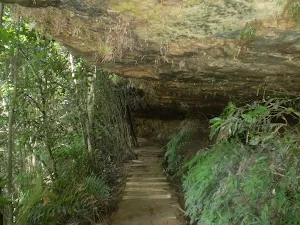
Moderate track
Faulconbridge to Blaxland
15.2 km One way, 2 Days

Experienced only
Plan your trip to and from the walk here
The Woodford to Glenbrook walk starts at the Woodford Station (gps: -33.735763, 150.48228)



The Woodford to Glenbrook ends at the Glenbrook Station (gps: -33.768939, 150.62134)
Weather Forecast
This walk starts in the Central Tablelands weather district.
Current Alerts
Park Information
Blue Mountains National Park
Attracting over 3 million visitors annually, Blue Mountains National Park holds some of Australia's most spectacular and diverse wilderness areas. Explore the Grose Valley, with its sheer sandstone cliffs, waterfalls and scenic walking, or enjoy the famous views of the Three Sisters. Easy access makes a day trips very worthwhile, but with such diversity it would be great to stay in one of the many B&B's and spend a few days soaking up the region.